




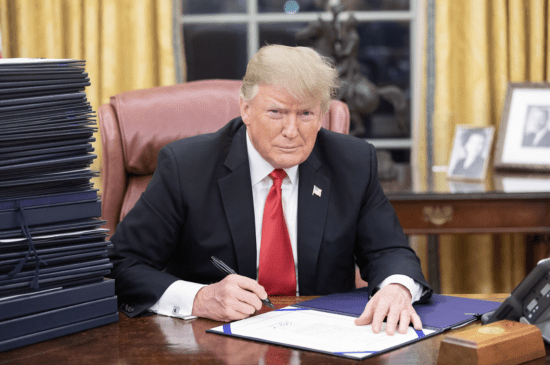
A controversial new proposal from the Trump administration is raising serious questions across the travel industry. According to reports, the Department of Homeland Security is currently drawing up plans that could potentially halt immigration processing for international flights arriving into certain “sanctuary cities” across the United States. That could impact major gateways like:
- New York
- Los Angeles
- San Francisco
- Chicago
- Seattle
- Philadelphia
- Denver
- Newark
If implemented, the proposal could create massive disruption for international travelers, airlines, airports, and the broader U.S. tourism industry.
The bigger question, however, is whether this is a serious policy proposal or simply a political pressure tactic.
Trump Administration Drawing Up A New Plan
Homeland Security Secretary Markwayne Mullin recently stated that the administration is considering withdrawing federal immigration processing services from airports located in sanctuary cities. Since Customs and Border Protection (CBP) officers process arriving international passengers, removing those services would effectively prevent international arrivals from operating normally at affected airports.
The proposal reportedly stems from escalating tensions surrounding immigration enforcement and protests outside an ICE detention facility in Newark, New Jersey.
Mullin argued that cities limiting cooperation with federal immigration enforcement should not continue benefiting from federal immigration processing infrastructure.
However, at this stage, no actual restrictions have been implemented.
The Potential Impact On The Travel Industry
Frankly, it’s difficult to overstate how disruptive this would be.
Many of America’s busiest international gateways are located in cities that could potentially fall under these policies.
Think about airports like:
- JFK
- Newark
- LAX
- SFO
- O’Hare
- Seattle-Tacoma
These airports collectively handle tens of millions of international passengers every year.
Removing international processing capabilities from even a handful of these airports would create:
- route disruptions
- airline scheduling chaos
- higher airfares
- reduced competition
- longer connections
- tourism losses
The U.S. Travel Association and airline industry groups have reportedly already expressed concerns about the idea.
Could This Actually Happen?
That remains highly uncertain. This could well be a negotiation tactic. Several legal experts have already suggested that such a policy could face serious constitutional and legal challenges if formally implemented.
Transportation Secretary Sean Duffy has also publicly pushed back on the concept, arguing that Americans should be able to travel freely regardless of local political disagreements.
The practical challenges would also be enormous.
International aviation relies on:
- federal coordination
- airline agreements
- customs infrastructure
- international treaties
- airport operations planning
Shutting down international arrivals at major gateways would likely trigger immediate litigation and intense industry backlash.
Why Travelers Should Still Pay Attention
Even if this proposal never becomes reality, it highlights something important. Government policy is increasingly becoming a major travel variable.
Over the past several years we’ve seen travel impacted by:
- visa policies
- border restrictions
- geopolitical tensions
- airline regulations
- immigration enforcement changes
For travelers, particularly those planning international trips months in advance, political decisions can increasingly affect:
- routing
- pricing
- airport operations
- entry requirements
That’s becoming a bigger part of travel planning than many people realize.
The Pundit’s Mantra
Personally, I have a hard time seeing this proposal becoming fully operational. As I stated earlier, this could simply be a negotiating tactic. The economic consequences alone would be enormous, especially as the U.S. prepares for major international events and continues competing for global tourism dollars.
That said, the fact that such a proposal is even being discussed shows how deeply immigration politics and travel policy have become intertwined. For now, travelers probably don’t need to panic.
But if you’re someone who frequently flies through major international hubs like New York, Los Angeles, or San Francisco, this is definitely a story worth watching.
Because even proposals that never get implemented can sometimes have real-world consequences for the travel industry.
___________________________________________________________________________________________________________________
Credit Card Offers
American Express Business Credit Cards
- Earn up to 300,000 Membership Rewards points with the Business Platinum Card
- Earn up to 200,000 Membership Rewards points with the Business Gold Card by American Express
Chase Sapphire Cards
- 75,000 Chase Ultimate Rewards points up for grabs with the Chase Sapphire Preferred Card!
- Earn 125,000 bonus points with the Chase Sapphire Reserve Card
- Earn 150,000 bonus points with the Chase Sapphire Reserve Card for Business Card
- Chase Ink Business Preferred Card offering a limited time welcome bonus of 100,000 points
Hilton Honors
- Pay No Annual Fee, Earn 100,000 points & $100 with the Hilton Honors American Express Card
- Earn 130,000 points & Pay No Annual Fee For the First Year with the Hilton Surpass Card
- Earn 175,000 points and 1 free night with the Hilton Aspire Card
- Hilton Business Card: Earn 130,000 points, pay $0 in annual fee for the first year!







All it takes for the disruption to be avoided is to have the authorities from those cities follow the immigration laws.
“…such a policy could face serious constitutional and legal challenges…”
Has that ever mattered to this administration?