




Since this post was first published in November 2024, the situation surrounding Spirit Airlines’ path forward has changed significantly. According to a recent report from The Air Current, “at least two” major U.S. airlines are preparing contingency plans for a scenario in which Spirit Airlines could cease operations entirely as early as December 13, 2025. This news comes amid a critical financing deadline tied to its ongoing Chapter 11 bankruptcy.
It is important, however, to note that Spirit Airlines has publicly denied that it is preparing to halt operations. Still, industry sources indicate that airlines and airport authorities are planning for the possibility of an abrupt shutdown.
It goes without saying that this is extremely concerning for the over 10,000 full-time employees at the airline. However, as a traveler, you may also be a bit worried, particularly if you have Free Spirit points saved up.
Should Spirit Airlines cease operations, what does this mean for your Free Spirit points? Are you at risk of losing your points? Here’s what Free Spirit members need to know about their points should the airline go bankrupt, and what travelers need to know should they be impacted during their travels.
In this December 2025 update, we’ll cover what Free Spirit members need to know about the fate of their points, and what Spirit customers can expect should the airline stop flying.
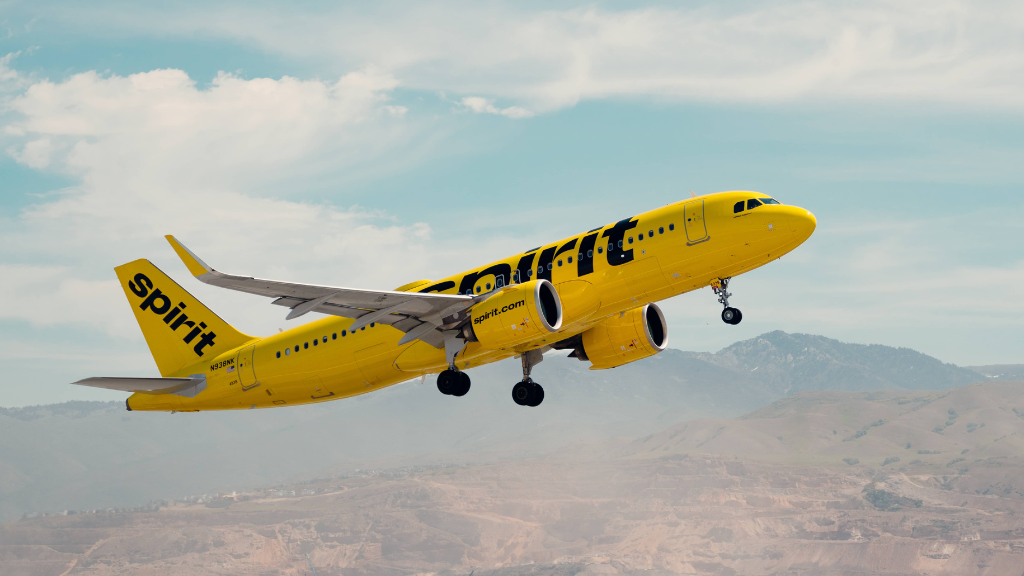
A Brief History of Spirit’s Financial Woes
Before we dive into what it might mean for travelers and members of the airline’s frequent flyer program, let’s first take a brief look at how Spirit Airlines got to this point.
January 2024:
- A federal judge blocked JetBlue’s proposed acquisition of Spirit Airlines on antitrust grounds on January 16, 2024. Spirit denied rumored plans to file for bankruptcy at that time, but its stock fell sharply on concern for its future path.
March 2024:
- JetBlue officially ended its takeover attempt of Spirit in March 2024. Then Attorney General Merrick Garland stated that the “decision by JetBlue is yet another victory for the Justice Department’s work on behalf of American consumers.”
November 2024:
- On November 18, 2024, Spirit Airlines filed for Chapter 11 bankruptcy protection for the first time, citing mounting losses, heavy debt and competitive pressures. The airline stated it would continue operating normally during the reorganization.
Early 2025:
- In March 2025, roughly 5 months after filing for bankruptcy protection, Spirit emerged from its first bankruptcy following completion of a debt restructuring plan. This included converting roughly $795 million of funded debt into equity and securing about $350 million in new equity financing to support ongoing operations.
Mid 2025:
- On August 11, Spirit’s quarterly earnings report warned that the airline might not be able to stay in business over the next 12 months, citing weak domestic leisure demand and adverse market conditions even after emerging from bankruptcy earlier in the year.
- On August 29, just weeks following its quarterly earnings report, Spirit filed for Chapter 11 bankruptcy for a second time in less than a year, acknowledging that the earlier restructuring had failed to achieve financial stability. This filing aimed to reduce fleet size, restructure obligations and stabilize the airline’s future.
Late 2025:
- Throughout Fall 2025, Spirit announced deeper workforce and network cuts, including furloughs and demotions of pilots and flight attendants as part of restructuring and cost-savings efforts. In October, a bankruptcy court approved up to $475 million in debtor-in-possession (DIP) financing and key lease agreements, intended to provide Spirit with liquidity and operational runway as it pursued restructuring.
- On December 8, Spirit transferred two of its Chicago O’Hare gates to American Airlines for $30 million as part of ongoing restructuring and network optimization.
December 12, 2025:
- The Air Current reports that multiple major U.S. airlines were planning for the possibility that Spirit could cease operations entirely as soon as December 13, 2025 if it fails to secure additional financing. Spirit has publicly denied plans to stop flying.
Past Airline Bankruptcies and Frequent Flyer Programs
Though Spirit Airlines filed for Chapter 11 bankruptcy protection, this second bankruptcy could potentially end in the cessation of the airline’s operations. Historically, most airline Chapter 11 bankruptcies in the U.S. resulted either in the airline exiting bankruptcy successfully or in a merger.
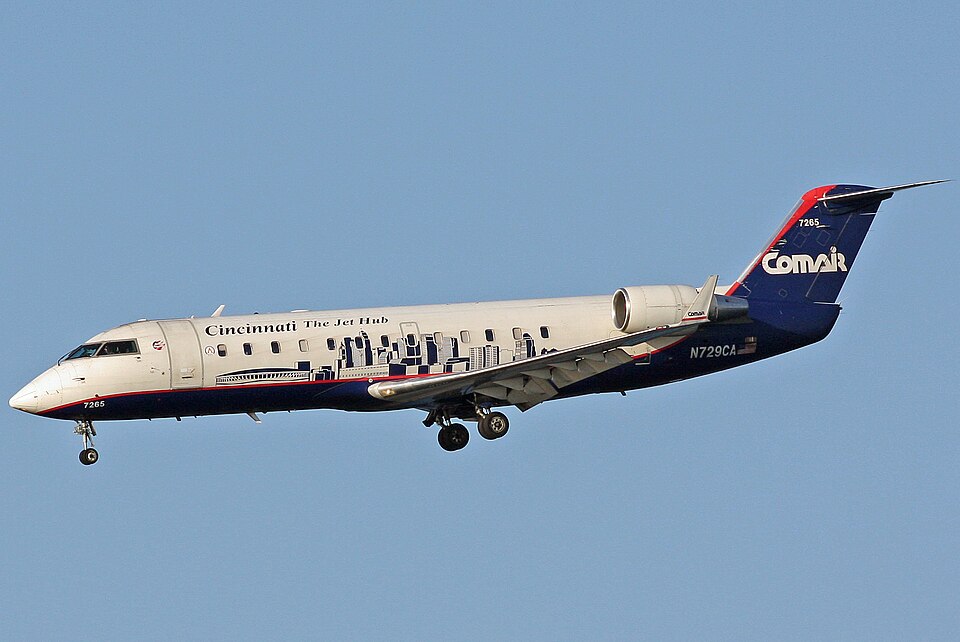
Still, a company is not guaranteed a future in the event that it files Chapter 11 as opposed to Chapter 7 which results in liquidation of the company. For context, the last time a major US airline filed for Chapter 7 bankruptcy was in 2012 when Comair ceased operations.
Comair, which was wholly owned by Delta Air Lines, did not have its own frequent flyer program as it operated as a regional carrier for its parent company. The last time a U.S. airline with a frequent flyer program went into liquidation was during the demise of Aloha Airlines.
Aloha Airlines’ frequent flyer program AlohaPass, ceased operations alongside the airline which meant that members who had not redeemed their miles simply lost them. In Europe, Air Berlin’s topbonus program met a similar fate when the airline filed for insolvency in 2017. While Chapter 7 bankruptcy has always meant the end of an airline’s frequent flyer program, this is usually not the case for airlines that enter bankruptcy protection.
Since 1978, when the airline industry was deregulated in the United States, there appears to be only a single case in which a frequent flyer program was liquidated or dissolved as a result of an airline filing for Chapter 11 bankruptcy protection.
This case involved the rather small low-cost carrier ATA Airlines. ATA Airlines filed for Chapter 11 bankruptcy protection on April 2, 2008, and announced that it would cease operations the following day. Though most of the airline’s assets were acquired by Southwest Airlines, members of the airline’s ATA Travel Rewards program were informed that there would be no way to convert their points to Southwest’s Rapid Rewards program.
Here’s a short list of US airlines that previously declared Chapter 11 bankruptcy and the fate of their frequent flyer programs:
| Airline | Frequent Flyer Program | Entered Bankruptcy | Exited Bankruptcy | Fate of Program |
|---|---|---|---|---|
| Eastern Airlines | OnePass | October 1989 | Ceased Operations | Merged into Continental Airlines program |
| Pan American World Airways (PanAm) | WorldPass | January 1991 | Ceased Operations | Merged into Delta Air Lines SkyMiles |
| Trans World Airlines | Aviators | December 2000 | Merged with American Airlines | Merged into American Airlines AAdvantage |
| Northwest Airlines | WorldPerks | September 2005 | Merged with Delta Air Lines | Merged into Delta Air Lines SkyMiles |
| ATA Airlines | Travel Rewards | April 2008 | Ceased Operations | Unused points were canceled |
| American Airlines | AAdvantage | November 2011 | December 2013 | Unchanged |
| PenAir (part of RavnAir Group) | FlyAway Rewards | August 2017 | Ceased Operations | Merged into RavnAir program |
At this point, following waves of massive airline mergers in the 2000s, nearly every major US airline would stay afloat for the foreseeable future if it entered Chapter 11 bankruptcy protection. US airlines are just so large that debt restructuring isn’t likely to result in the end of an airline.
In Spirit’s first bankruptcy, this context was reassuring for travelers and members of the airline’s Free Spirit program. In the case of Spirit’s current bankruptcy, this historical context is not as reassuring. Even if Spirit continues flying, this doesn’t necessarily mean the airline’s loyalty program would go unscathed.
Travel Tech Deal: Score The Bose QuietComfort Headphones for 50% Off
What Past Airline Bankruptcies Can Tell Us About the Free Spirit Program
Given that, only a single US airline that had filed for Chapter 11 bankruptcy ended up dissolving its frequent flyer program, there is a precedence. That is, as long as an airline remains operational or there is a plan in which assets are sold off to another airline, your points and miles are probably safe. But this is not a sure bet. Also, being safe doesn’t mean your points or miles would retain their value.
Until recently, the most likely outcome for Spirit Airlines appeared to be a traditional Chapter 11 restructuring in which flights would continue and the Free Spirit program would remain intact. That assumption is now less certain.
Frequent flyer programs are a massive business and can often rival the value of some of an airline’s other assets. For example, American Airlines’ AAdvantage program is valued somewhere between $18 and $30 billion. Compare that to the airline’s actual market capitalization which, as of November 15, 2024, was around $9.46 billion.
Of course, Spirit Airlines is much smaller than American Airlines and its Free Spirit program pales in comparison to the AAdvantage program. Nevertheless, the Free Spirit program is a well-established loyalty program. Unfortunately, there are no figures available for just how much the program is worth or how many members the program has.
In a financial document filed in late 2023, Spirit Airlines states that “The success or failure of our business will have a direct impact on the success and the value of the Free Spirit Program and the Spirit Saver$ Club® program.” It notes that any changes made to the Free Spirit program could impact the airline’s relationship with Free Spirit program partners and members. The airline recognizes the value of the frequent flyer program to its overall business.
If Spirit Airlines is able to secure additional financing and continue operating through bankruptcy, your Free Spirit points are likely to remain usable, though not without risk of devaluation or reduced redemption options.
However, if Spirit were to cease operations entirely, Free Spirit points would almost certainly lose their value unless the loyalty program were sold, transferred, or otherwise preserved. There is no guarantee this would happen, particularly for a low-cost carrier with a relatively small loyalty ecosystem.

So, What Does This Mean for My Spirit Points?
What this means for your Spirit points will depend on whether or not Spirit Airlines ends up ceasing operations. So long as the airline continues operating, your Spirit points are probably safe. There are risks in holding a large reserve of any loyalty program currency. Just like gift cards, your frequent flyer miles can become completely useless should a company or its loyalty program cease to exist.
Should I Redeem My Spirit Points Now?
There’s still a lot of uncertainty over the future of Spirit Airlines. The latest reporting from The Air Current only cast further doubt over what the future holds for the airline.
That said, if you hold a large balance of Free Spirit points and have a realistic opportunity to redeem them for travel you actually plan to take in the near future, doing so sooner rather than later may be prudent.
If Spirit continues flying, your points may retain value. But if the airline abruptly ceases operations, there may be little to no warning, and no practical recourse for unused points.
As always, avoid speculative bookings. But in the current environment, holding a large balance of Spirit points carries more downside risk than it did even a few weeks ago. Even if Spirit Airlines continues operating for weeks or months or even exits this bankruptcy, this does not necessarily mean your points will keep their value. Here’s how your points could lose value even if Spirit continues flying.
A Smaller Network Means Fewer Options for Award Flights
As we’ve seen over the past year, Spirit has been forced to terminate leases and sell off aircraft. Unsurprisingly, this has resulted in a much leaner route network for the airline. While a reduced route network does not directly impact the value of Free Spirit points, having fewer flights on which to redeem your points ultimately means your points are less valuable. Fewer seats, fewer destinations, and fewer flights are not good for frequent flyers looking to book an award flight.
Related: How Many Spirit Points Do You Need for an Award Flight?
As a Traveler, What Happens If Spirit Airlines Stops Flying?
There is also ample historical precedent for airlines ceasing operations abruptly. Here are a few fairly recent and noteworthy examples and what it meant for travelers at the time:
- Primera Air (2018)
The Danish low-cost carrier abruptly ceased operations in October 2018 after failing to secure financing. Thousands of passengers were stranded across Europe and North America, and the airline’s long-haul low-cost model was widely cited as financially unsustainable. - WOW Air (2019)
Icelandic ultra-low-cost carrier WOW Air shut down overnight in March 2019 after last-minute acquisition talks collapsed. Flights were canceled immediately, leaving passengers scrambling for alternatives with minimal consumer protections in place. - Norwegian Long-Haul (2021)
While Norwegian Air survived as a short-haul carrier, it abruptly exited the long-haul market during its restructuring, permanently grounding its Boeing 787 fleet. Passengers with future long-haul bookings were forced to seek refunds or rebook elsewhere. - Air Berlin (2017)
When the airline ceased operations, Air Berlin was Germany’s second-largest airline. The airline ended operations after failed rescue efforts and grounded flights in October 2017 despite earlier assurances that flying would continue.
There are a few things that travelers can learn from these examples. If you have an upcoming Spirit Airlines flight, consider taking the following precautions:
- Monitor your flight status closely, including the day of departure, as schedules and cancellations could change with little notice.
- Avoid prepaying for optional add-ons such as seat assignments, checked bags, or onboard extras unless absolutely necessary.
- Use a credit card with travel protections for any new purchases, as chargeback rights and travel interruption benefits may provide additional protection if flights are disrupted.
- Be ready to find alternatives including back-up flights with other airlines, overnight accommodations, or even rental cars.
These steps won’t eliminate risk, but they can help limit potential impacts on your travel plans and financial exposure if Spirit’s operational situation changes abruptly.
Read More: American Express Gold Card Referral Bonus Showing Up to 100,000 Points
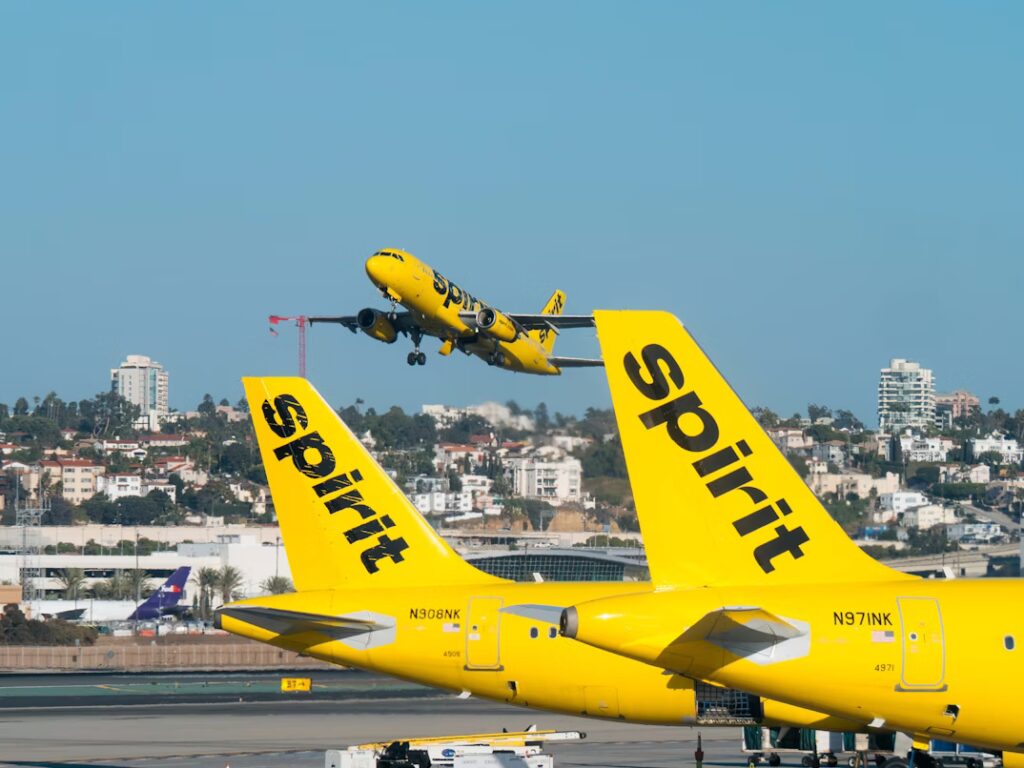
The Bottom Line
Historically, frequent flyer programs have largely survived Chapter 11 bankruptcies, and in most cases, airlines continue operating while they restructure. That precedent helped reassure Free Spirit members during Spirit Airlines’ first bankruptcy in late 2024. The airline’s current situation, however, carries meaningfully higher risk.
As of writing this post, Spirit Airlines is still flying and has publicly denied plans to halt operations. Nevertheless, credible industry reporting indicates that competitors and airport authorities are actively preparing for the possibility that the airline could cease operations entirely if it fails to secure additional financing.
If Spirit continues operating through its bankruptcy, Free Spirit points are likely to remain usable, though not without risks such as reduced redemption options or program devaluation.
If Spirit were to stop flying altogether, however, Free Spirit points would almost certainly lose their value unless the loyalty program were sold or otherwise preserved. There is no guarantee that would occur, particularly for a low-cost carrier with a relatively small loyalty ecosystem.
For now, travelers should closely monitor developments, avoid building new Free Spirit balances unnecessarily, and consider redeeming existing points for trips they genuinely plan to take in the near term. While a complete shutdown is not guaranteed, the downside risk for holding Spirit points is higher today than it was even a few weeks ago.
As always, the safest approach to any airline loyalty currency is to earn and redeem with purpose rather than hoard points indefinitely, especially when the airline’s future remains uncertain.
Do you have any Free Spirit Points? If so, what are your plans for your Free Spirit Points?