



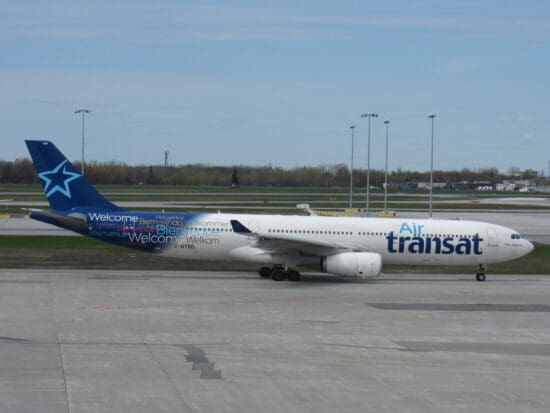
Air Transat will stop flying to the United States by June 2026 after removing all remaining U.S. routes from its schedule. Air Transat has announced the decision based on the current demand environment. The Montreal-based airline’s final services to Florida is scheduled for the summer. Some of the routes canceled include Montreal (YUL) to Orlando and Fort Lauderdale and Quebec City (YQB) to Fort Lauderdale. These are scheduled to end between May 4 and June 13, 2026. This move follows a prolonged scaling-back of transborder flights by other airlines, including WestJet, as demand weakened. Air Transat operated nine U.S. routes but has seen that network shrink as travel volume declined due to external economic and policy factors affecting travel patterns.
Focusing on Europe and Other Markets
With the U.S. now off their destination map, Air Transat is pivoting its focus toward international leisure markets. They have been particularly focusing in Europe and the Caribbean. The airline has recently expanded routes such as Montreal–Agadir (Morocco) and increased frequencies on several transatlantic services, capitalizing on stronger demand for overseas travel. Transat has also continued its partnership with Turkish Airlines on flights to Istanbul.
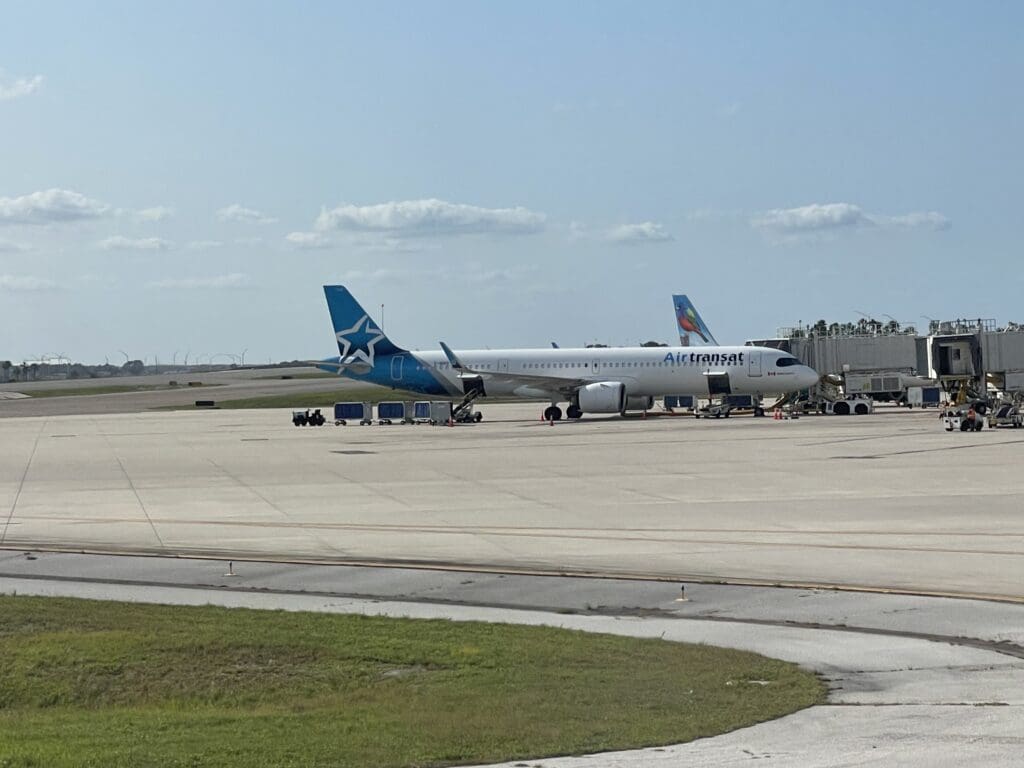
Europe remains a strategic pillar for the carrier, with the long-haul Airbus A321LR aircraft allowing Air Transat to reach new and underserved European destinations via key hubs such as Toronto and Montreal.
Will Transat Merge with Porter?
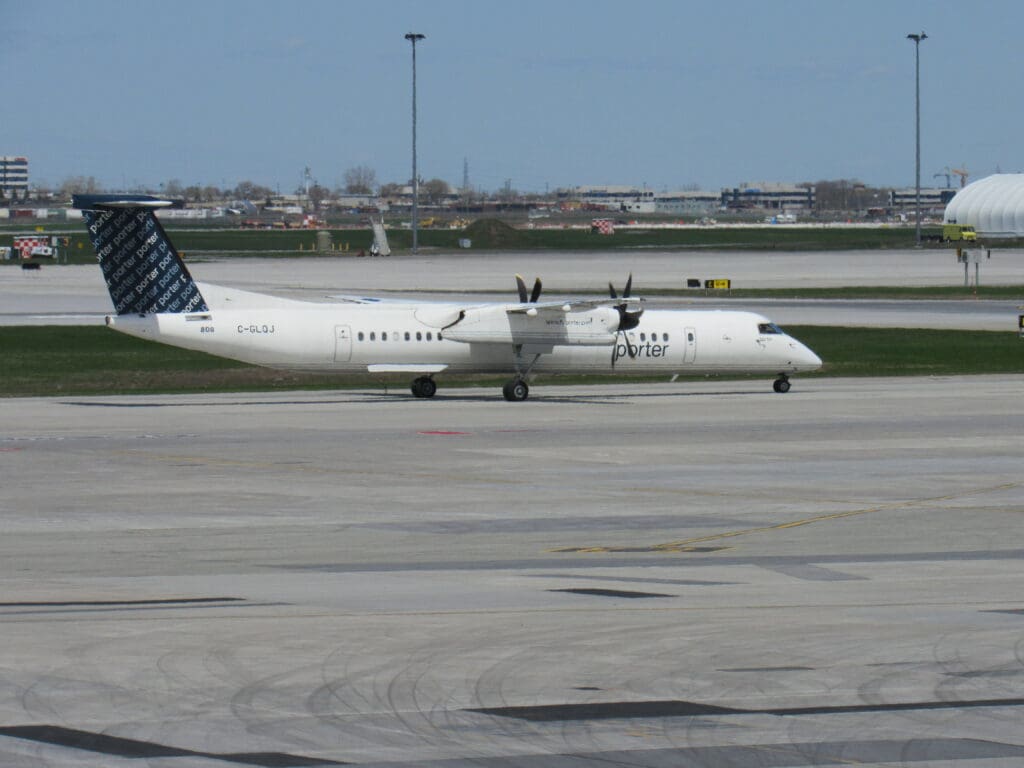
There has been speculation that Air Transat could merge with Porter Airlines. The two carriers have been building closer ties through partnerships and network interlining, designed to expand reach and connectivity. Porter is a primarily short0haul carreir and will continue to offer flights to the US. Air Transat is a strong leisure carrier with strong recognition in Quebec, while Porter is strongest in Ontario (Toronto and Ottawa). The airline outlined a more integrated joint venture-like cooperation that aims to feed traffic between Porter’s domestic network and Transat’s international flights at a recent investor presentation. Still, such partnerships stop short of an outright merger, and no official consolidation deal has been announced. That said, a merger continues to be speculated about and would be a logical combination given their networks.
Conrado’s Thoughts
Air Transat’s withdrawal from the U.S. marks a strategic refocusing. With only about 1% of its capacity historically tied to U.S. destinations, the carrier is reallocating resources to regions with more robust demand. For travelers, this means fewer direct Canada–U.S. leisure options on Air Transat but potential growth in European and long-haul. This builds off the picture of how Canadian carriers are reshaping networks in response to shifting travel patterns.
If you want to stay up to date with the latest airline news follow me on Bluesky or LinkedIn!
Also follow Boarding Area on Bluesky!